What is dry heat used to sterilize?
 Ava Hall
 .
Then, what is dry heat method of sterilization?
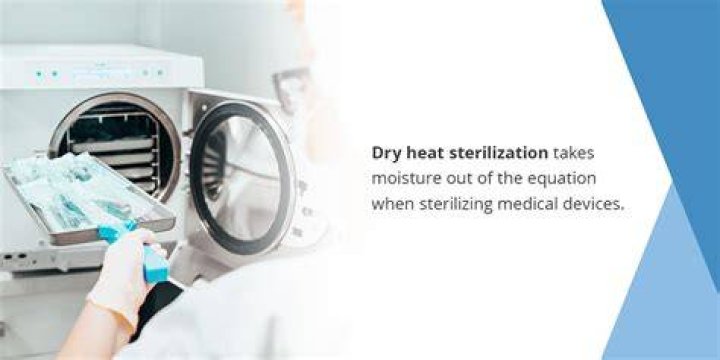
It is the process of killing bacterial spores and microorganisms using a high temperature. This type of sterilization method is used on items that cannot get wet such as powders, oils, and the likes. Picture 1: An example of a dry heat sterilizer.
how does dry heat sterilization kill microbes? As compared to the moist heat sterilization, the temperature in this method is higher. The temperature is usually higher than 356° F or 180 °C. Dry heat helps kill the organisms using the destructive oxidation method. This helps destroy large contaminating bio-molecules such as proteins.
Furthermore, what materials can be sterilized using dry heat?
Materials that can be sterilized using dry heat
| Material | Maximum Temperature |
|---|---|
| Nylon (polyamide, heat-stabilized grades) | Up to 266°F |
| Nylon | >120°C |
| Paper | Up to 134°Cb |
| Perfluoroalkoxy | Up to 170°C |
What is the difference between dry heat sterilization and an autoclave?
Autoclaving refers to a process of instrument sterilization that uses time, temperature and pressure to kill all forms of microbial life, whereas dry heat sterilization is basically sterilizing using an oven that uses time and heat to kill all forms of microbial life, including microbial spores and viruses.
Related Question Answers
What is the principle of sterilization?
PRINCIPLES OF STERILIZATION & DISINFECTIONSterilization is the killing or removal of all microorganisms, including bacterial spores, which are highly resistant. Sterilization is usually carried out by autoclaving, which consists of exposure to steam at 121°C under a pressure of 15 lb/in2 for 15 minutes.What is the principle of autoclaving?
Autoclaves Working Principle:Autoclaves use pressurized steam as their sterilization agent. The basic concept of an autoclave is to have each item sterilized -whether it is a liquid, plastic ware, or glassware- come in direct contact with steam at a specific temperature and pressure for a specific amount of time.What is the principle of autoclaving and dry heating?
Dry-Heat Sterilization: Principle, Advantages and Disadvantages. Dry heat sterilization (killing or removal of all microorganisms, including bacterial spores) technique requires longer exposure time (1.5 to 3 hours) and higher temperatures than moist heat sterilization.What is the advantage of using an autoclave?
1 Autoclaving destroys microorganisms more efficiently than dry heat and hence the material is exposed to a lower temperature for a shorter period. 2 It is used for sterilization of a large number of official injections.What are the 4 methods of sterilization?
Different sterilization methods used in the laboratory. Sterilization can be achieved by a combination of heat, chemicals, irradiation, high pressure and filtration like steam under pressure, dry heat, ultraviolet radiation, gas vapor sterilants, chlorine dioxide gas etc.Where are autoclaves used?
Autoclaves are commonly used in healthcare settings to sterilize medical devices. The items to be sterilized are placed inside a pressure vessel, commonly referred to as the chamber. Three factors are critical to ensuring successful steam sterilization in an autoclave: time, temperature and steam quality.What is the principle of moist heat sterilization?
Mode of Action/Principle of Moist Heat sterilizationMoist heat destroys microorganisms by the irreversible denaturation of enzymes and structural proteins. The temperature at which denaturation occurs varies inversely with the amount of water present.What is the minimum time required for dry heat sterilization?
2 hours
What are the 3 types of sterilization?
Three primary methods of medical sterilization occur from high temperature/pressure and chemical processes.- Plasma Gas Sterilizers.
- Autoclaves.
- Vaporized Hydrogen Peroxide Sterilizers.