The cytoskeleton is composed of protein filaments and is found throughout the inside of a eukaryotic cell. The cytosol is the main component of the cytoplasm, the fluid that fills the inside of the cell. The cytoplasm is everything in the cell except for the cytoskeleton and membrane-bound organelles..
Beside this, what cell is a cytoskeleton in?
Cytoskeleton. Cytoskeleton, a system of filaments or fibres that is present in the cytoplasm of eukaryotic cells (cells containing a nucleus).
Beside above, do all cells have cytoskeleton? The cytoskeleton is a network of filaments and tubules that extends throughout a cell, through the cytoplasm, which is all of the material within a cell except for the nucleus. It is found in all cells, though the proteins that it is made of vary between organisms.
Correspondingly, which structures are commonly found within the cytoskeleton?
The cytoskeleton is a cellular "skeleton" that crisscrosses the cytoplasm. Three main cytoskeleton fibers are microtubules, intermediate filaments, and microfilaments. Microtubules are the thickest of the cytoskeleton structures and are most commonly made of filaments which are polymers of alpha and beta tubulin.
Is cytoskeleton found in plant or animal cells?
Animal and plant cells have some of the same cell components in common including a nucleus, Golgi complex, endoplasmic reticulum, ribosomes, mitochondria, peroxisomes, cytoskeleton, and cell (plasma) membrane.
Related Question Answers
Where are microtubules found?
Microtubules are nucleated and organized by microtubule organizing centers (MTOCs), such as the centrosome found in the center of many animal cells or the basal bodies found in cilia and flagella, or the spindle pole bodies found in most fungi.Do humans have cytoskeleton?
Cytoskeleton. The cytoskeleton is responsible for cell shape, motility (movement) of the cell as a whole, and motility of organelles within a cell. Unlike the human skeleton, the cytoskeleton is extremely dynamic, meaning the filament systems are able to lengthen or shorten very rapidly.What is a cytoskeleton made of?
The cytoskeleton of a cell is made up of microtubules, actin filaments, and intermediate filaments. These structures give the cell its shape and help organize the cell's parts. In addition, they provide a basis for movement and cell division.Why is the cytoskeleton important?
The network consists of protein microfilaments, intermediate filaments, and microtubules. The cytoskeleton provides an important structural framework for: Cell shape. For cells without cell walls, the cytoskeleton determines the shape of the cell.What are the two main functions of the cytoskeleton?
Through a series of intercellular proteins, the cytoskeleton gives a cell its shape, offers support, and facilitates movement through three main components: microfilaments, intermediate filaments, and microtubules.What are Microfilaments made of?
Of the three types of protein fibers in the cytoskeleton, microfilaments are the narrowest. They function in cellular movement, have a diameter of about 7 nm, and are made of two intertwined strands of a globular protein called actin. For this reason, microfilaments are also known as actin filaments.What might a cell look like without a cytoskeleton?
What problems might a cell experience if it had no cytoskeleton? The cell would be organized. It would be weak and might fall apart. The cell would also be unable to move, divide, and transport organelles.How are Microfilaments formed?
Microfilaments are formed when globular (g)-actin-monomers polymerize into filamentous (f) actin polymers. The cells with the highest proportion and most organized system of microfilaments are striated muscle cells. In order to organize and regulate microfilaments, there are several actin associated binding proteins.What is the difference between microtubules and microfilaments?
Microtubules are usually discussed with microfilaments. Although they are both proteins that help define cell structure and movement, they are very different molecules. While microfilaments are thin, microtubules are thick, strong spirals of thousands of subunits. Those subunits are made of the protein called tubulin.What is the difference between cytoplasm and cytoskeleton?
Cytoplasm is the jelly-like material found inside all cells. It is mostly water, and it provides a place for the cells essential chemical reactions to take place. It also helps support the organelles, like the nucleus and mitochondria, The cytoskeleton is the "skeleton" of the cell.Where is the cytoskeleton in a plant cell?
The cytoskeleton is a complex, dynamic network of interlinking protein filaments present in the cytoplasm of all cells, including bacteria and archaea. It extends from the cell nucleus to the cell membrane and is composed of similar proteins in the various organisms.What would happen if there was no cytoskeleton?
1 Answer. Cytoskeletan is the supportive framework of the cell , it provides mechanical strength to the cell same as Cell wall present in bacteria or plants. Due to cytoskeleton , cell is able to retain it;s shape. Without cytoskeletan cell will no longer be able to retain its shape and will ultimately burst.What does a cytoskeleton look like?
Cytoskeleton Structure: Intermediate FilamentsIFs actually resemble thin threads. They are middle-sized, around ten nanometers in diameter, and are the meshwork that supports the cell rather like a net. Interestingly, there are many different kinds of IF proteins, and not all cells have the same type of IF protein.Where is the cell membrane located?
Answer and Explanation:The cell membrane is located on the outside of a cell. It acts as a border that separates the cell from other cells or substances in the environment.What are the functions of the cytoskeleton?
1. The cytoskeleton is a network of microfilaments, intermediate filaments, and microtubules. 2. The cytoskeleton has a variety functions including, giving shape to cells lacking a cell wall, allowing for cell movement, enabling movement of organelles within the cell, endocytosis, and cell division.What are the functions of microtubules?
The Function Of Microtubules. Microtubules are hollow, fibrous shafts whose main function is to help support and give shape to the cell. They also serve a transportation function, as they are the routes upon which organelles move through the cell.Where is the chloroplast located?
The chloroplast is located throughout the cytoplasm of the cells of plant leaves and other parts depending on the type of plant. Actually, you can see where in a plant the chloroplasts are because chloroplasts are what make the plant appear green.Is there a cytoskeleton in bacteria?
It is now known that bacterial cytoskeletal homologs exist for all of the main groups of eukaryotic cytoskeletal proteins, i.e., the actin, tubulin, and intermediate filament (IF) groups. The bacterial cytoskeleton consists of the several groups of intracellular structures that meet this definition.Does cytoskeleton contain DNA?
The nucleus contains most of the genetic material (DNA) of the cell. Additional DNA is in the mitochondria and (if present) chloroplasts. The cytoskeleton consists of microtubules, intermediate fibers, and microfilaments, which together maintain cell shape, anchor organelles, and cause cell movement. 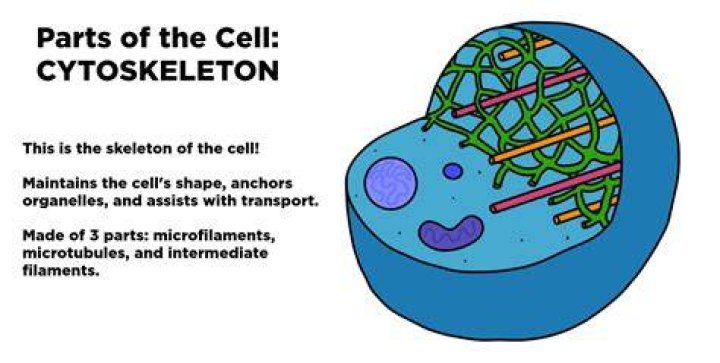
 Sophia Aguilar